
Who Qualifies as a Healer?
And what is required to become a healer?

Many years ago, a young woman shyly approached my booth at a local health expo. She asked a couple questions about my healing work but didn’t seem too fascinated with my answers.
I waited, smiling encouragingly without trying to look weird.
Then came the real question.
“How can you tell if you’re a healer? I mean—”
And without waiting for my two cents, she launched into a series of explanations about why she was asking. Wanting to help people. Having a hard time seeing someone else suffer. Strange things that had no cause except… maybe… possibly… I mean not really but maybe… intuition. And more.
She so clearly wanted to be a healer. It was beautiful. She was thinking about nursing school, but not sure.
It was clear to me that, whatever training she chose, she would be a wonderful healer.
Back then, however, all I had was an overly pat answer (one that also applies to addiction):
“If you are wondering, then the answer is: yes. Yes you are.”
It was so formulaic that I was embarrassed saying it in that moment. But it seemed to satisfy what she was looking for, and she drifted away smiling.
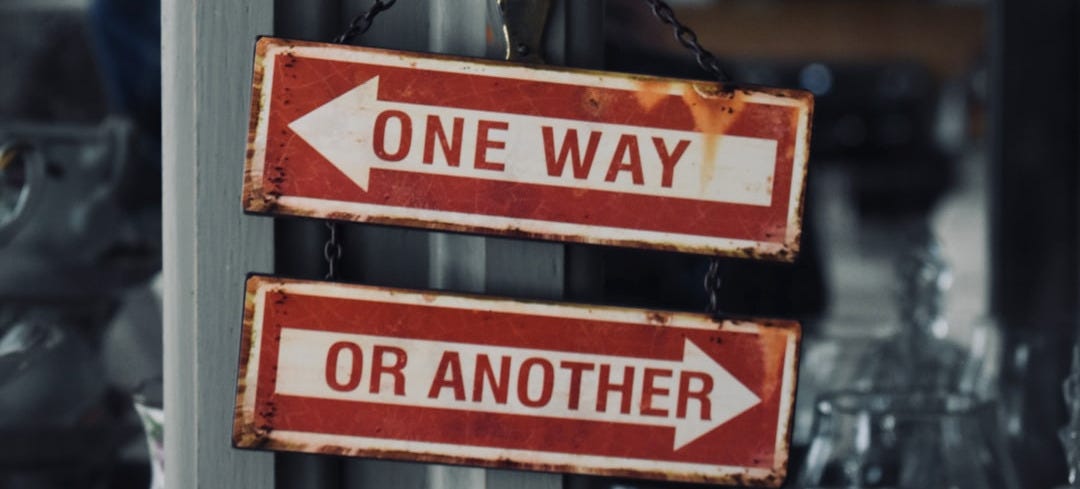
What Does It Take to Be a Healer?
Afterwards, her question set up camp in my mind. I mean it moved in. I couldn’t stop wondering what really, truly made someone a healer.
Was there a better answer?
If I want to be a postal carrier, does that make me a postal carrier? No. I have to apply to the job, prequalify, have basic skills, get some training, and learn on the job.
In terms of a job, you can tell people that you’re that role on the day you get hired.
For healing, are you a healer just because you want to be? Do you need to be hired? (Many healers I know hang out their own shingle.)
The real question she was asking was this: Are you chosen or predestined to either be a healer or not a healer?
The impression I felt in the energy healing world I was training in was yes. Like my pat answer, you were born a healer if you were drawn to healing. Folks talked about things like karma and life purpose and being blessed with the gift of healing. I got the impression that you were either a healer or not a healer.
In fact, thinking about this question made me feel insecure. Did I myself qualify as a healer, even after over five years of practice? Did that count, or was there more?
Was I just a pretender if I wasn’t born a healer?
(Insert the sound of a needle dragging across a record.)
The Danger of Thinking Healers Are Born
It’s pretty common to believe that healers are special. Even if you don’t think you believe it, that attitude seems to be in the Zeitgeist.
It’s implied that healers are different somehow. And not just energy healers. I’ve heard comments like this about folks who went to medical school—”Oh, he was born a healer. He’ll make a great doctor.”
And maybe he will. But this kind of thinking is dangerous.
And it’s not what I discovered.
A Fixed Mindset Has Limits
First of all, it’s a fixed mindset. Dr. Carol Dweck’s book Mindset: The New Psychology of Success defines the fixed mindset as one that assumes skills are carved in stone. Given to us at birth. How we are. And there’s nothing we can do to change that.
You’ve either got it or you don’t. That sounds like believing some people are natural-born healers and others aren’t.
Her book describes the negative outcomes and limitations that occur when you have a fixed mindset, including: Feeling bad because you aren’t a “chosen one,” avoiding challenges, and failure hitting harder than it needs to.
That sounds like the last thing healers deserve!
A growth mindset, on the other hand, asserts that skills can be learned and strengthened over time. She shares how holding this attitude allows you to view setbacks as learning experiences, challenges as necessary to growth, and feedback as helpful.
The growth mindset correlates to what I discovered about healing and healers—that anyone can learn universal healing skills and a universal healing mindset and practice these things to help others heal.
Sharing how to do that is what this Substack (and the book I’m writing) is all about.
Healing Is Neither Woo-Woo nor Magical
Secondly, healing itself is not out of our hands. “Healers are born” and our other misunderstandings about healing tend to also put this work into a category of magical or woo-woo things we don’t understand.
It sounds like we’re just lucky if healing happens at all, no matter what we do.
Just like I’m just lucky if I’m a healer.
Instead, I found those universal healer skills I mentioned above, which we can all learn, plus a healing mindset we can develop. We can train ourselves to take any technique (including the one we are already using) and develop the aspects of it that truly create healing.
Anyone who helps someone experience healing is a healer. That includes practitioners from surgeons to shamans, coaches to psychotherapists, energy healers to meditation teachers, spiritual guides to priests, and more. I can see parents as healers, entrepreneurs, managers. Anyone who puts their mind to it.
I would love to see a health industry in which all healing practitioners are united in our mission. Where we all acknowledge that we are each doing essentially the same thing, using different techniques, with different beliefs.
After all, we all want to help people live better, more empowered lives.
Every human can become a healer. Healing is learnable, neither completely magical or woo-woo or utterly out of our hands.
How this Answer Arrived
I must confess I didn’t discover Dweck’s book until a decade after that health expo. So how did I draw this conclusion?
My story is this—as a new healer I was very insecure (but only for the first 15 years or so). Before each session, I worried whether I’d be able to truly help the client.
As a result, I had been asking myself and others these questions:
“What is the healing transformation?”
“How do I know when my clients have experienced it?”
And ultimately: “What makes healing happen so I can do more of that in each session?”
After that expo, I added “Who is a healer” to my pile.
Eventually I answered these questions by developing a model of healing. It shows what factors are required to create healing and how they interact. It shows what healers—and seekers—do to create a healing transformation.
Even better, it defines healing itself, since I worked with a deep misunderstanding of what healing even is for many years. (I was focused on repair, not healing.)
Who Is a Healer—The Final Answer
Soon I realized the model showed what was required to be a healer.
It is this: To qualify as a healer, you must be alive.
That’s it.
Really.
We are all nascent healers. Every one of us.
“Ok, but seriously, Daria, what does it take for someone right now to become a healer?”
Ah, that’s easy.
A foundational choice.
Choose to be a healer. Choose to help others experience healing.
Then choose the learning, the practicing, and the doing that naturally follows.
If you’ve wondered whether you are a healer or not, I hope you know that the answer is YES. Not because you asked or because healers are special but because you have everything within you that is required to be a healer. You only have to choose it.
My answer stands corrected.
A Quick Summary
Believing “healers are born” is a disempowering, fixed mindset a la Dr. Carol Dweck. It breeds insecurity and discourages exploration. A growth mindset tells us we can train to be a healer.
The only prerequisite to be a healer is to be alive. Everything after that — the skills, the mindset, the practice — starts with a choice.
Healing is learnable, not magical or out of our hands. We can practice the universal healing skills and healing mindset that all successful healers are using.
Healers span categories across energy healing, medical professionals, traditional healing, spiritual guides, coaches, parents, teachers, and more. Healers simply help others experience healing.
We healers can unite behind our shared goal while appreciating the wide range of techniques and personal beliefs that we offer.
References
Dweck, Carol S. Mindset: The New Psychology of Success. Updated ed., Ballantine Books, 2016.
I love this, Daria. Especially because I know this isn’t an idea you simply arrived at intellectually. You’ve lived the question. And I love where you’ve landed: being a healer isn’t something bestowed upon a special few. It begins with a choice, then becomes something we learn, practice, and live. Beautiful work, my friend.